

What Is 360-Degree Evaluation? How to Apply with Tested
360-degree evaluation is a multi-source feedback system in which an employee is assessed not only by their manager but also by peers, subordinates and themselves. This holistic approach reveals blind spots, clarifies development areas and genuinely measures leadership capacity.
How sufficient is it to rely solely on a manager's perspective to understand an employee's true performance and competencies? Team dynamics invisible to the manager, communication difficulties noticed by peers, or leadership gaps experienced by subordinates all remain largely unseen in traditional appraisal systems. 360-degree evaluation was designed precisely to close this gap, and it is one of the most powerful human resources tools available today.
360-degree evaluation is a comprehensive assessment method that measures an employee's performance and competencies using feedback collected from multiple sources. In this approach, the employee is assessed by their direct manager, teammates (peers), subordinates if applicable, and — most importantly — by themselves through a self-assessment. In this article, we will walk through what 360-degree evaluation is, how it is implemented, and how the Tested platform streamlines and deepens that process step by step.
Whether you are running a leadership development programme, looking for an objective decision-making mechanism in promotion processes, or wanting to support training needs analysis with data, 360-degree evaluation is a strategic tool that serves all of these goals.
What Is 360-Degree Evaluation?
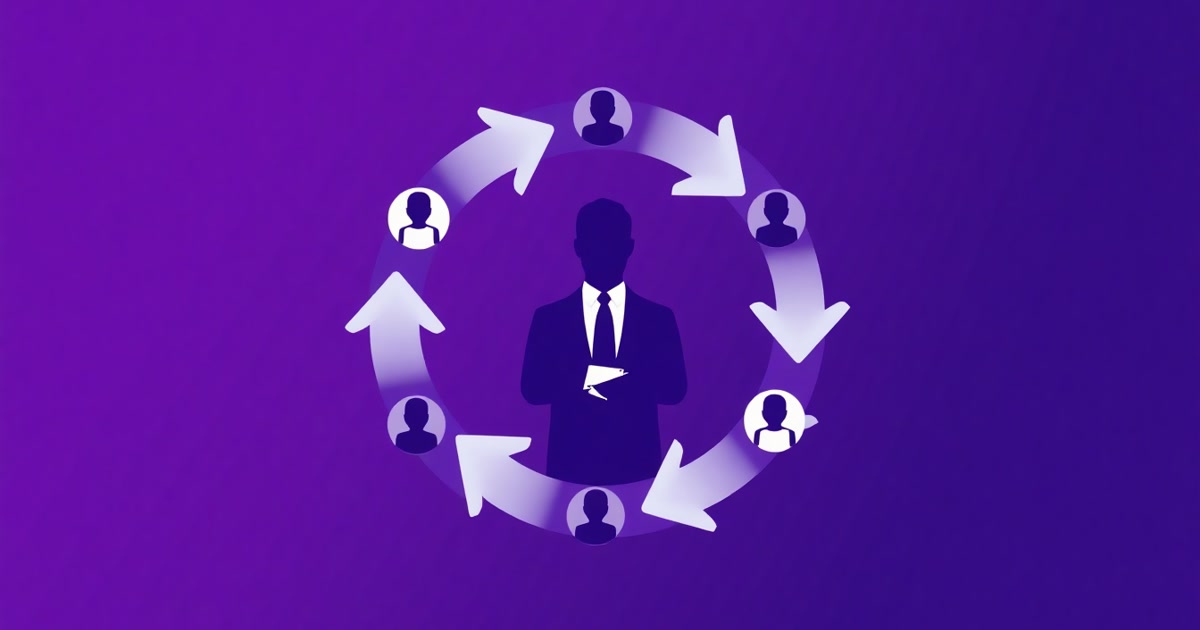
The concept of 360-degree evaluation takes its name from the direction of the assessment: an employee is evaluated by all surrounding stakeholders in a manner that forms a complete circle. These stakeholders typically consist of four groups:
- Manager (Top-Down): Assesses the employee's level of goal attainment, job responsibilities and overall performance.
- Peers (Lateral): Teammates who work together on a daily basis provide feedback on dimensions such as communication, teamwork and reliability.
- Subordinates (Bottom-Up): For employees in a managerial role, subordinates offer a valuable perspective: competencies such as motivating the team, delegating authority and coaching ability are measured through this source.
- Self-Assessment: The employee's own perception of their strengths and development areas is compared against data from other sources, revealing blind spots and the level of self-awareness.
This multi-layered structure significantly reduces the risk of bias inherent in single-source evaluations. The resulting profile reflects the employee's true competency map.
What Purposes Is 360-Degree Evaluation Used For?
Three main areas of application stand out in corporate use of 360-degree evaluation:
Leadership Development
For mid- and senior-level managers, 360-degree feedback is one of the most powerful development triggers. A manager who perceives themselves as "a strong communicator" while their team experiences something different can only be made visible through a tool like 360-degree evaluation. When used alongside leadership competency inventories, this tool becomes the engine of both individual and organisational transformation.
Promotion and Talent Management
Promotion decisions are often shaped by the manager's subjective assessment. 360-degree data, however, provides an objective and multi-dimensional foundation for this process. Not only the technical competencies of a potential leader but also their team interactions and leadership behaviours come within the scope of evaluation. Data-driven evaluation in promotion processes is increasingly making 360-degree tools an indispensable element.
Training Needs Analysis
360-degree data is extremely valuable for understanding which competencies need to be strengthened across the organisation. Beyond creating individual development plans, it becomes possible to identify competency gaps at the department or seniority level and design training programmes accordingly. This approach directly enhances the effectiveness of training needs analysis processes.
How Is 360-Degree Evaluation Implemented with Tested?
Tested offers a platform that fully digitalises the 360-degree evaluation process and enriches it with artificial intelligence. Every step of the process is designed to help HR teams save time and improve the quality of results.
1. Role Definitions and Rater Assignment
For each evaluation cycle on the Tested platform, the roles of the employee being assessed, the manager, peers and subordinates are clearly defined. The HR manager or process owner enters into the system which people will evaluate which employee in which role. This structure guarantees the impartiality and scope of the evaluation from the outset.
2. Automated Invitation and Reminder Emails
Once the rater list is created, the system automatically sends personalised invitation emails to all participants. During the evaluation period, automatic reminders are sent to those who have not yet completed the form. This automation relieves HR teams of the burden of manual follow-up and significantly raises completion rates.
3. Confidentiality and Anonymity Guarantee
On the Tested platform, individual responses can never be viewed openly. Only group averages and anonymous comments are reflected in reports. This structure encourages raters to give honest and genuine feedback, directly increasing the reliability of the evaluation. The same commitment to security permeates all components of the 360-degree evaluation system.
4. AI-Powered Open-Ended Response Analysis
One of the most valuable parts of 360-degree evaluations is the responses given to open-ended questions. Answers to questions such as "What is this person's strongest leadership quality?" or "What area of development would you suggest?" contain in-depth insights that go beyond numerical scores. Tested's AI engine automatically analyses these responses to detect recurring themes and sentiment tones. The role of AI analysis of open-ended questions in this process multiplies the strategic value of the results.
5. Visual Reports with Radar Charts
When evaluations are complete, Tested automatically generates a comprehensive report for each employee. Radar charts present strengths and development areas across different competency dimensions in a comparative visual format. Differences between manager perception and self-assessment, along with the perspectives of peers and subordinates, can all be seen on the same chart. This visual richness makes feedback conversations more productive and easier to understand.
6. Department and Organisation-Wide Comparison
Beyond individual reports, Tested provides comparative analyses at the department level and across the organisation. Which departments are stronger or weaker in certain competencies, and development trends when data from multiple periods is compared, become clearly visible. This macro perspective creates an indispensable database for strategic HR decisions. Managing employee performance measurement with digital systems makes these analyses sustainable.
7. Development Plan Recommendations
The Tested platform does not stop at presenting data; it also generates personalised development plan recommendations for each employee at the end of reports. Based on the competency gaps identified, concrete and actionable suggestions are provided regarding which training programmes, coaching sessions or job rotations could be beneficial. This feature directly reinforces the organisational value of the development report.
Factors That Make 360-Degree Evaluation Effective
The success of a 360-degree evaluation programme depends not only on using the right tools but on consciously managing the entire process. The purpose of the evaluation must be clearly defined from the outset and transparently shared with all stakeholders: delivering the message "These results will be used for development purposes, not to make promotion decisions" builds trust and makes it easier for participants to give honest feedback.
Rater selection is also a critical step. A group of raters that is sufficiently large and composed of people who genuinely know one another increases the reliability of the results. Finally, and perhaps most importantly, concrete action must be taken after the evaluation. If reports are produced and then put in a drawer without being shared with employees, the system gradually loses credibility. Tested's development plan recommendations come into play at exactly this point, turning the process into a closed feedback loop.
When 360-degree evaluation is structured with the right infrastructure and the right approach, it goes beyond being a mere measurement tool and becomes a strategic system that feeds the organisation's learning and development culture. The automation, AI support and visual reporting capabilities offered by the Tested platform make this transformation accessible for organisations of all sizes.
Frequently Asked Questions
What is the difference between 360-degree evaluation and traditional performance appraisal?
Traditional performance appraisal reflects only the manager's point of view, whereas 360-degree evaluation brings together the manager, peers, subordinates and the employee's own self-assessment. This multi-source structure reduces single-source bias and produces a far more accurate picture of the employee's real competency profile. It is especially critical in leadership development and promotion processes where this holistic perspective matters most.
How is confidentiality ensured in 360-degree evaluation?
Individual responses are never displayed openly; reports include only average scores and anonymous comments. On the Tested platform, subordinate and peer feedback is not shown in groups until a minimum number of raters has been reached. This structure encourages participants to give honest and open feedback. You can find out more about the 360-degree evaluation system.
In which industries and for which positions is 360-degree evaluation most commonly used?
360-degree evaluation is widely used in finance, retail, manufacturing, technology and the public sector. The positions that benefit most are mid- and senior-level managers, project leaders and team coordinators, because collaboration, communication and leadership competencies are critical in these roles and require input from multiple stakeholders. When selecting a competency assessment tool, sector-specific needs should be taken into account.
How long does a 360-degree evaluation process take?
A typical 360-degree evaluation process consists of three main phases:
1) Preparation (1–2 weeks): Rater assignment, form configuration and communication plan.
2) Assessment Period (1–2 weeks): Participants complete the forms.
3) Reporting and Feedback (1 week): Presentation of results and development planning.
Automation on the Tested platform significantly reduces this timeline. Digital performance measurement systems directly increase time efficiency.
How should 360-degree evaluation results be communicated to employees?
The best approach for delivering results to employees follows these steps:
1) Highlight strengths first: Start with a motivating opening.
2) Make development areas concrete: Use behaviour-based examples rather than abstract judgements.
3) Create an action plan: Translate development goals into measurable steps.
4) Schedule a follow-up meeting: Turn the evaluation from a one-time event into a development cycle.
Tested's radar charts and AI-powered recommendations facilitate this conversation. You can learn more about why the development report matters.
Can 360-degree evaluation data be used in promotion decisions?
Yes, but it requires a careful approach. 360-degree evaluation data alone may not be sufficient for a promotion decision; it should be interpreted together with performance targets, business outcomes and potential assessments. When applied correctly, this data adds an objective dimension to promotion processes and balances managerial bias. Learn more about data-driven evaluation in promotion processes.
What role does AI analysis play in Tested's 360-degree evaluation system?
Tested's AI engine automatically analyses open-ended feedback responses to detect recurring themes and sentiment patterns. For example, it surfaces trends such as "communication gap" or "strong strategic vision" from hundreds of employee comments within seconds. This allows HR managers to focus on interpretation and action rather than hours of manual reading. Learn more about AI-powered open-ended question analysis.
What are the most common mistakes that cause 360-degree evaluations to fail?
The most common mistakes are:
1) Undefined purpose: Leaving it unclear whether the evaluation is for development or performance management creates trust issues.
2) Poor rater selection: Too few raters, or raters who do not know each other well, reduces result reliability.
3) No action after feedback: If reports are produced but never shared with employees, the process becomes meaningless.
4) Compromised confidentiality: Situations where individual responses can be guessed destroy system credibility.
The Tested platform addresses these pitfalls with anonymity guarantees, guided setup and development plan recommendations. Integrating training needs analysis with 360-degree evaluation reduces these risks.



Start Your 360-Degree Evaluation with Tested Today
Manage your multi-source evaluation processes on a single platform — with automated invitations, anonymous feedback, AI analysis and radar charts.
Try Free for 14 Days